

Hospital Costs Abu Dhabi 2026: Real Prices & Wait Times
Hospital care in Abu Dhabi is not cheap, especially if you walk into a private hospital without checking your insurance network first. The good part is that Abu Dhabi has a strong healthcare system, with the Department of Health listing 65+ hospitals, 8,900+ inpatient beds, 770+ clinics, and 950+ pharmacies across the emirate. The real question is not only “Are hospitals expensive?” It is which hospital you choose, what your insurance covers, how urgent your case is, and whether you understand the billing before treatment starts.
What are Hospital Costs Abu Dhabi?
Hospital costs in Abu Dhabi refer to the actual amounts residents, expats, and visitors may pay for consultations, emergency care, diagnostic tests, treatment, surgery, hospital rooms, medication, and insurance-related co-payments at Abu Dhabi hospitals. For expats, the biggest factor is usually health insurance. Abu Dhabi links residency and insurance closely, and employers are generally required to provide at least minimum coverage for employees.
A basic visit may feel affordable with insurance, but the bill can rise quickly when you add specialist fees, lab tests, imaging, emergency charges, procedures, pharmacy costs, and out-of-network penalties.
Private vs Public Hospital Abu Dhabi
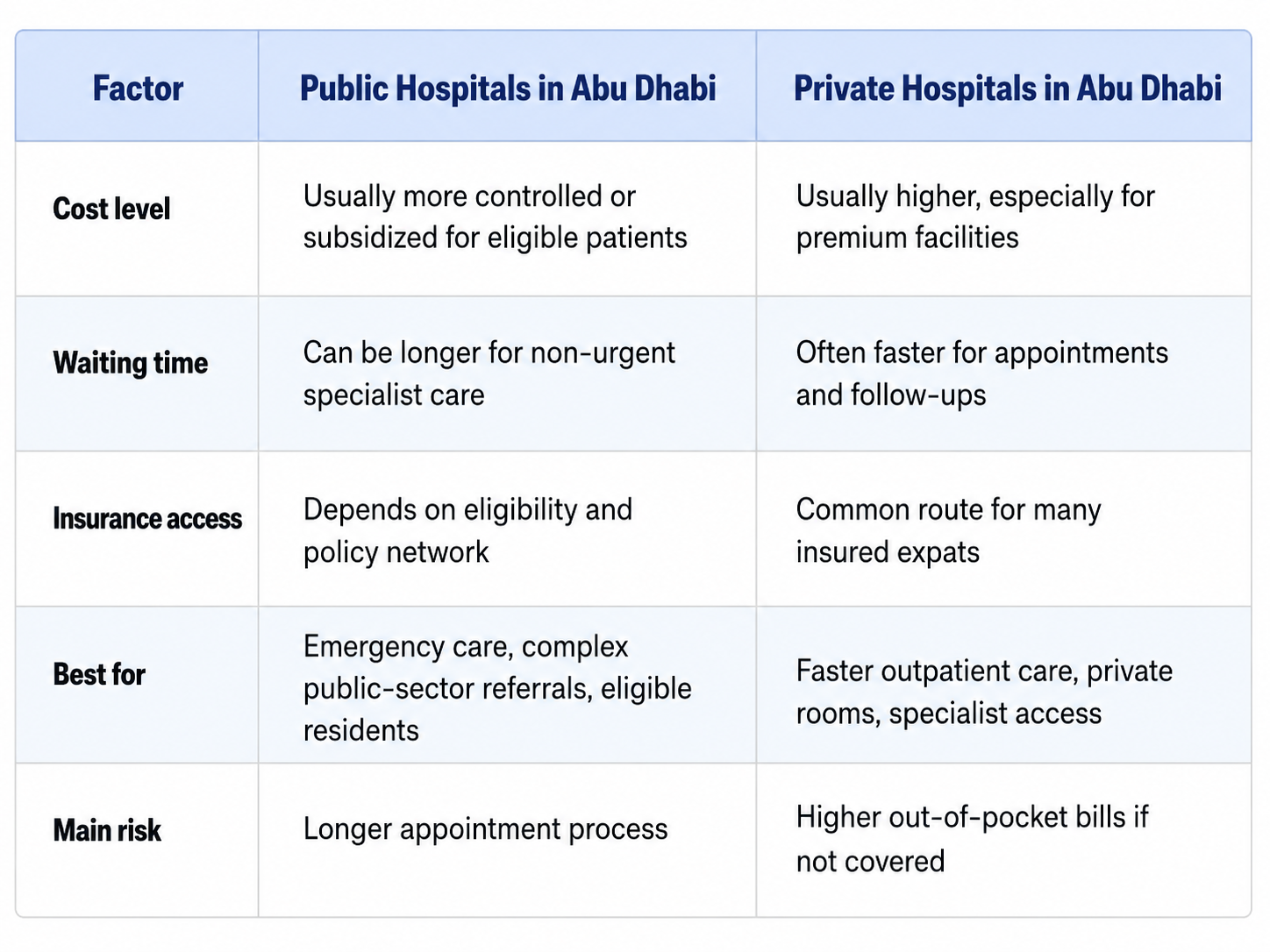
Private vs. public hospital decisions in Abu Dhabi usually come down to speed, cost, network access, and comfort.
Factor | Public Hospitals in Abu Dhabi | Private Hospitals in Abu Dhabi |
Cost level | Usually more controlled or subsidized for eligible patients | Usually higher, especially for premium facilities |
Waiting time | Can be longer for non-urgent specialist care | Often faster for appointments and follow-ups |
Insurance access | Depends on eligibility and policy network | Common route for many insured expats |
Best for | Emergency care, complex public-sector referrals, and eligible residents | Faster outpatient care, private rooms, specialist access |
Main risk | Longer appointment process | Higher out-of-pocket bills if not covered |
Where SEHA Fits in Abu Dhabi Hospital Costs
SEHA, the Abu Dhabi Health Services Company, is one of the main public healthcare networks in Abu Dhabi. It includes major hospitals such as Sheikh Khalifa Medical City, Al Rahba Hospital, Corniche Hospital, Tawam Hospital, Al Ain Hospital, Al Dhafra Hospitals, and SEHA Kidney Care.
For residents and expats, SEHA can be a practical option when the hospital is included in your insurance network or when you are eligible for public-sector care. It may be more cost-controlled than many premium private hospitals, but waiting time can still depend on urgency, specialty, appointment availability, and referral requirements.
Top Signs You Need to Understand Hospital Costs in Abu Dhabi
You should check costs before booking if:
Your insurance has a limited hospital network
You need a specialist consultation
You are booking an MRI, CT scan, endoscopy, or surgery
You are pregnant or planning maternity care
You are new to Abu Dhabi as an expat
Your employer gave you a basic insurance plan
You are unsure about co-payments or deductibles
Basic plans can reduce the shock, but they may still leave you with co-pays and exclusions. Some 2026 expat-focused insurance guides note that Abu Dhabi patients may often face co-payment systems, with routine private GP consultations ranging from $70 to $125 and private hospital rooms varying widely by facility.
Root Causes: Why Hospital Bills Feel Expensive
Hospital bills in Abu Dhabi become expensive for five practical reasons.
First, private hospitals charge more for convenience and access to specialists. Private care is often faster and more comfortable, but that speed comes at a higher cost.
Second, insurance networks control your real cost. A hospital may be excellent, but if it is outside your network, you may pay more or need reimbursement later.
Third, diagnostics are often billed separately. A simple consultation can turn into a larger bill if blood work, X-rays, scans, or follow-up procedures are added.
Fourth, emergency care is priced differently. Emergency visits can include registration, doctor review, tests, medication, observation, and specialist referral.
Fifth, expats may misunderstand employer coverage. A plan that is valid for visa purposes may not be strong enough for maternity care, dental care, chronic care, advanced imaging, or premium hospitals.
How to Get Started Before Visiting a Hospital
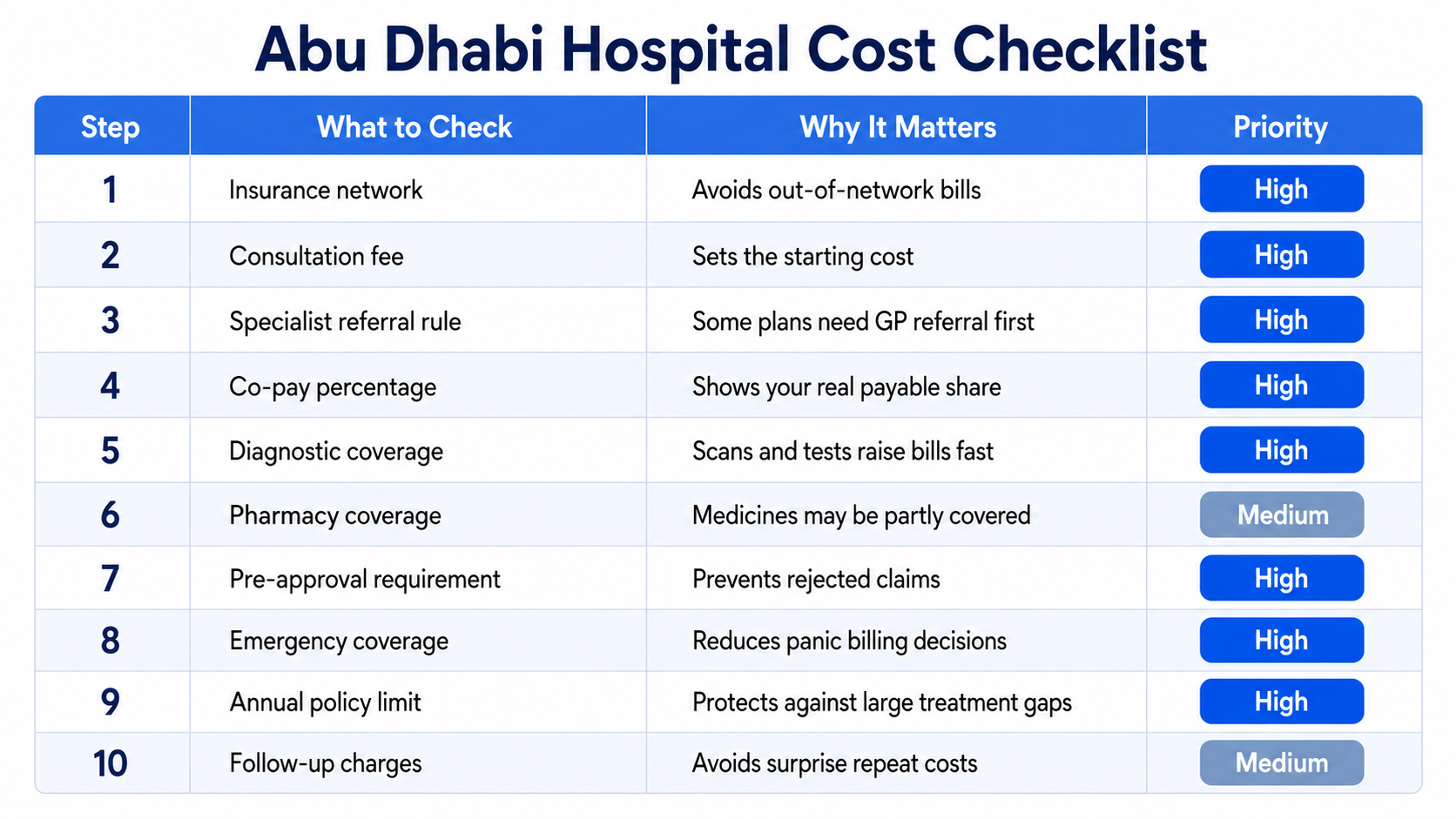
Check your insurance card and app. Confirm whether the hospital is in-network.
Call the hospital billing desk. Ask for consultation, file opening, and expected test charges.
Ask about pre-approval. Some scans, procedures, and admissions need insurer approval.
Confirm your co-pay. A 10%, 20%, or 30% co-pay can change the final bill.
Ask for an estimate in writing. This is useful before surgery or maternity care.
Use clinics for non-urgent issues. A clinic visit may cost less than a hospital visit.
Keep all invoices. You may need them for reimbursement or claims.
Solutions & Strategies
Foundational
Start with your insurance network. For most residents, the cheapest hospital is not always the best choice. The better choice is the hospital best suited to your condition. Use public or semi-government hospitals when your policy allows it and your case is suitable. Use private hospitals when speed, specialist access, or continuity of care matters more.
Tools
Use your insurer’s mobile app, hospital websites, call centers, and appointment portals before visiting. For Abu Dhabi residents, digital health records are more connected than in many markets. Malaffi reported that all public and private hospitals in Abu Dhabi were connected to its health information exchange, helping clinicians access patient information across facilities.
Professional
For planned surgery, chronic disease, maternity, or high-cost specialist care, speak to both the hospital billing team and insurance provider before confirming treatment. Ask these direct questions:
Is this hospital in my network?
Is this doctor covered?
Is pre-approval required?
What is my co-pay?
What is excluded?
What happens if complications need extra treatment?
Conclusion & Next Steps
Hospital costs Abu Dhabi residents and expats face in 2026 are manageable if you prepare before treatment.
Check your insurance network first
Ask for estimated costs before tests
Confirm co-payments and approvals
Use clinics for simple non-urgent issues
Choose hospitals based on coverage, not only reputation
If you are new to Abu Dhabi, build a small healthcare plan now: shortlist two in-network clinics, one in-network hospital, one emergency option, and one specialist center covered by your insurance. The best hospital decision in Abu Dhabi is not always the cheapest one. It is the one that gives you the right care, at the right time, with costs you understand before the bill arrives.
Frequently Asked Questions
Are hospitals in Abu Dhabi expensive?
Yes, hospitals in Abu Dhabi can be expensive, especially private hospitals, specialist care, emergency visits, diagnostics, and surgeries. With the right insurance network, the real out-of-pocket cost can be much lower.
Is public healthcare cheaper than private healthcare in Abu Dhabi?
Public healthcare is generally more cost-controlled for eligible patients, while private hospitals usually charge more for faster access and convenience. Expats should check whether their insurance allows access to specific public or private facilities.
What is the average private hospital consultation cost in Abu Dhabi?
Private consultation costs vary by hospital, doctor level, and specialty. Some Abu Dhabi cost guides place general private consultations around AED 250 to AED 400, while specialist consultations may reach AED 600 to AED 800.
Do expats need health insurance in Abu Dhabi?
Yes. Abu Dhabi requires health insurance for residents, and expats usually receive at least basic coverage through employers. Dependents, freelancers, Golden Visa holders, and self-sponsored residents may need to arrange their own cover.
How long is the waiting time in Abu Dhabi hospitals?
Waiting time depends on urgency, hospital type, department, and appointment availability. SEHA’s published targets include 90% within 60 minutes for arrival wait time and 90% within 10 working days for new non-cancer specialist or consultant appointments.
Related Posts
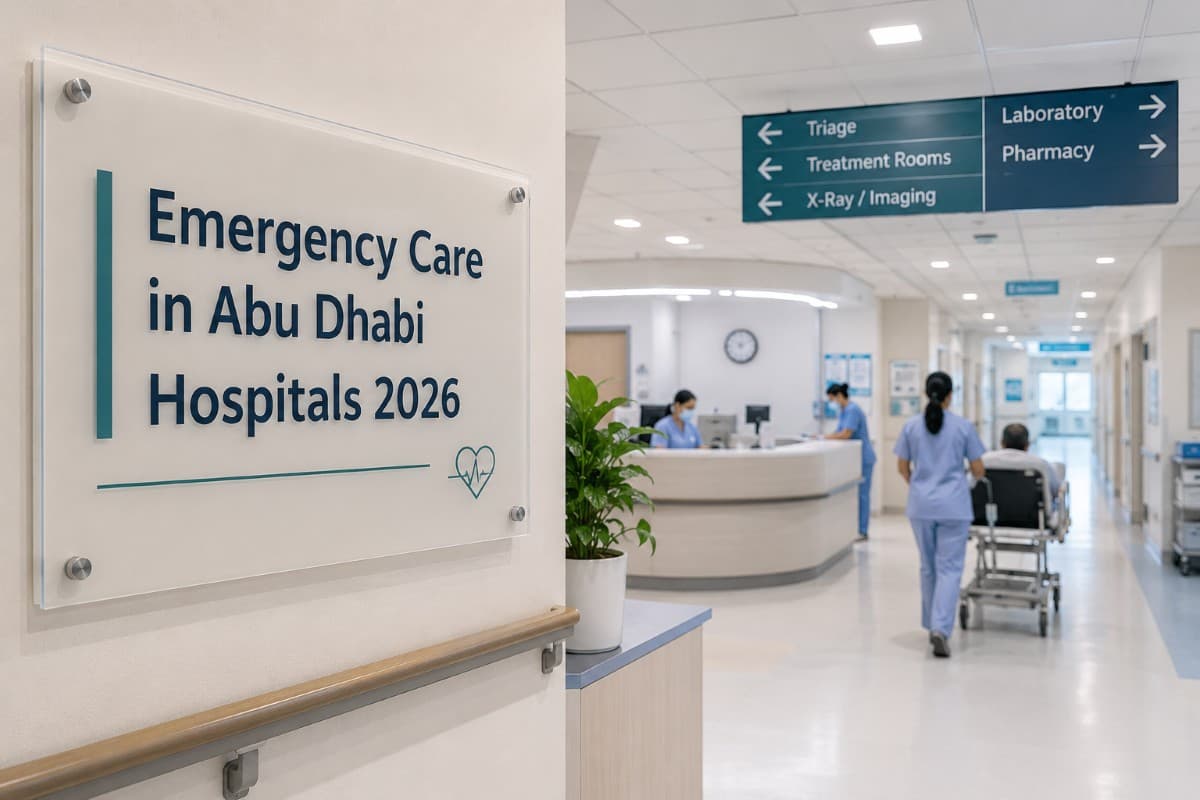
Emergency Care in Abu Dhabi Hospitals 2026
Learn how emergency care in Abu Dhabi works, which hospitals handle trauma and critical cases, when to call an ambulance, and what expats should know.

Best Maternity Hospitals in Abu Dhabi for Expats
Find the best maternity hospitals in Abu Dhabi for expats and families, including delivery care, NICU, insurance, doctors, and birth planning.