

Health Insurance Coverage in Abu Dhabi for Expats
Health insurance coverage in Abu Dhabi is not something expats should check after reaching the hospital. It should be checked before choosing where to go, which doctor to see, and whether your treatment needs approval.
Abu Dhabi has a mandatory health insurance system for residents, and many expats receive coverage through an employer plan. The Department of Health Abu Dhabi regulates health insurance rules, while platforms such as TAMM list authorized insurance providers and services.
Why Expats Should Check Insurance Before Visiting a Hospital
A hospital may be well known, close to your home, and highly rated, but that does not always mean your insurance will cover treatment there. Most insurance plans work through approved hospital and clinic networks. If you visit a hospital outside your network, you may need to pay more, submit a reimbursement claim, or cover the full bill yourself.
Before visiting a hospital in Abu Dhabi, check:
Whether the hospital is in your insurance network
Whether your doctor or specialist is covered
Whether your treatment needs pre-approval
What your co-payment or deductible is
Whether pharmacy, lab tests, scans, or follow-ups are included
This simple check can prevent billing issues at reception.
How Health Insurance Works for Expats in Abu Dhabi
Health insurance coverage in Abu Dhabi is usually linked to your residency and employment status. Many employees receive medical insurance through their employer, while dependents may be covered under the same plan or a separate policy.
Abu Dhabi’s insurance law includes employer responsibilities for expatriate residents and dependents, depending on policy rules and eligibility.
Common Types of Insurance Plans
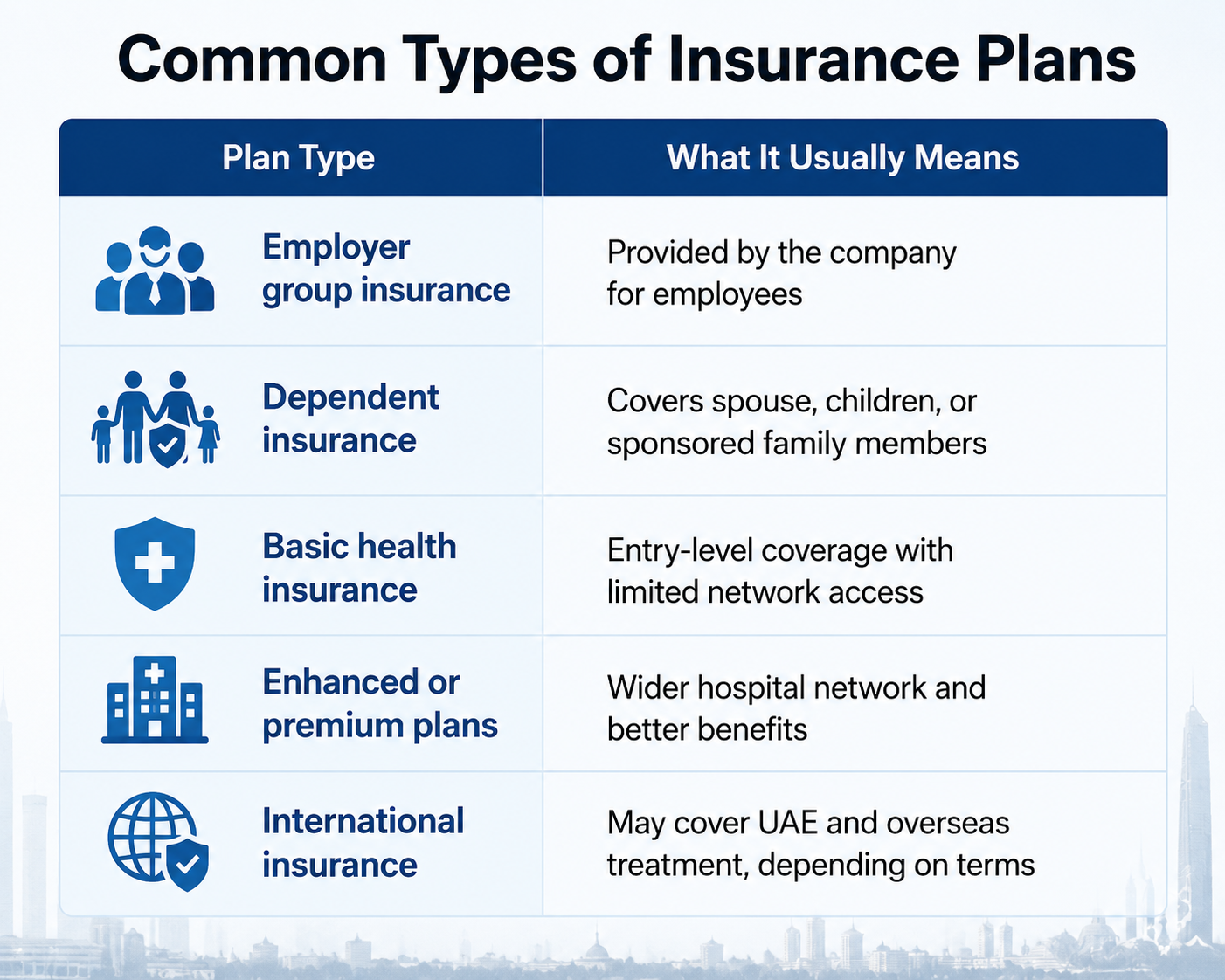
Expats may come across different types of plans in Abu Dhabi:
Plan Type | What It Usually Means |
|---|---|
Employer group insurance | Provided by the company for employees |
Dependent insurance | Covers spouse, children, or sponsored family members |
Basic health insurance | Entry-level coverage with limited network access |
Enhanced or premium plans | Wider hospital network and better benefits |
International insurance | May cover UAE and overseas treatment, depending on terms |
The plan name alone is not enough. Always check the provider network, exclusions, and approval rules.
What to Carry When Visiting a Hospital
Most hospitals in Abu Dhabi ask for your Emirates ID because insurance details are often linked to it. You may also need your insurance card, policy number, or insurer app login. Carry these before your visit:
Emirates ID
Insurance card or digital policy
Referral letter, if required
Previous medical reports
Prescription details
Approval number, if already issued
For first-time visits, arrive with enough time for insurance verification. Some hospitals may confirm coverage before letting you proceed with consultation, tests, or treatment.
Network Hospitals Matter More Than Hospital Popularity
For expats, the best hospital is not always the biggest hospital. The better choice is often the hospital that matches your medical need and accepts your insurance plan.
For example, a family looking for maternity care may need to check if prenatal visits, delivery, NICU care, and newborn coverage are included. A patient seeing a cardiologist may need to confirm whether diagnostic tests like ECG, echo, or CT scans need approval.
Daman’s Abu Dhabi Basic Plan, for example, mentions hospital stays, treatments, medicines within Abu Dhabi, and emergency services within the UAE.
When Pre-Approval Is Needed
Pre-approval means your insurer must approve a service before the hospital provides it under coverage. This is common for planned procedures, advanced scans, surgeries, maternity packages, and specialist treatments. You may need approval for:
MRI, CT scans, or advanced imaging
Surgeries and inpatient admission
Maternity delivery
Long-term therapy
Certain specialist consultations
High-cost medicines
Do not assume the hospital has approval just because you booked an appointment. Ask the billing or insurance desk before the visit.
Emergency Treatment and Insurance Status
Emergency care is treated differently. The Department of Health Abu Dhabi has stated that healthcare facilities in the emirate must provide emergency treatment regardless of insurance status or validity.
That does not mean every non-emergency service will be free or fully covered. After the emergency is stabilized, billing, transfer, admission, or further treatment may depend on your insurance policy. For serious symptoms, go to the nearest emergency department first. For non-urgent issues, check your network before choosing a hospital.
Maternity, Children, and Family Coverage
Families should review insurance details more carefully than single employees. Maternity, newborn care, vaccinations, pediatric visits, and specialist referrals may follow different limits.
Before choosing a maternity hospital in Abu Dhabi, ask your insurer:
Is maternity included?
Is there a waiting period?
Are prenatal scans covered?
Is normal delivery and C-section covered?
Is NICU included?
Is the newborn covered from birth?
This matters because maternity care often involves multiple visits, tests, and possible emergency scenarios.
What Expats Should Ask Their Insurance Provider
Before visiting a hospital, call your insurer or check the app. Ask direct questions, not general ones. Good questions include:
Is this hospital covered under my plan?
Is this doctor covered?
Do I need a referral?
Is pre-approval required?
What is my co-payment?
Are lab tests and scans included?
What happens if I need admission?
Can I claim reimbursement if I pay upfront?
Health insurance coverage in Abu Dhabi becomes easier to use when you understand these answers before you need care.
Common Mistakes Expats Make
Many billing problems happen because patients assume all hospitals work the same way. They do not. The most common mistakes include visiting an out-of-network hospital, ignoring pre-approval rules, assuming dependents have the same coverage, and not checking maternity limits. Another mistake is relying only on HR. HR can explain your company plan, but the insurer confirms exact coverage.
Final Advice Before Choosing a Hospital
Use hospital rankings and reviews as a starting point, not the final decision. For expats, the right hospital should meet three conditions: it treats your condition, accepts your insurance, and can explain the approval process clearly.
Before visiting, check your policy, confirm the hospital network, and keep your Emirates ID ready. That small step can save time, reduce stress, and help you avoid surprise bills.
Frequently Asked Questions
Is health insurance mandatory for expats in Abu Dhabi?
Yes. Abu Dhabi has a mandatory health insurance system for expatriate residents, with employer and dependent coverage rules set under local health insurance law.
Can I visit any hospital with my Abu Dhabi insurance?
Not always. Most plans have a hospital network. If the hospital is outside your network, you may pay more or need to claim reimbursement.
Do hospitals in Abu Dhabi accept digital insurance cards?
Many hospitals can verify insurance through Emirates ID or insurer systems, but it is safer to keep your digital card or policy details available.
What happens if my insurance approval is rejected?
You can ask the hospital insurance desk for the reason. Sometimes missing documents, wrong codes, or policy exclusions cause rejection. You may need to submit more reports or choose another covered option.
Are emergency cases treated without valid insurance?
Emergency treatment must be provided in Abu Dhabi regardless of insurance status or validity, based on Department of Health Abu Dhabi guidance. Further billing may depend on the case and policy.
Does employer insurance cover my family in Abu Dhabi?
It depends on your employer plan, sponsorship status, and policy terms. Some plans include dependents, while others require separate dependent coverage.
Should expats choose hospitals based on insurance first?
Yes, for non-emergency care. Choose a hospital that is medically suitable and inside your insurance network. That is the most practical way to avoid unexpected costs.
Related Posts

Hospital Costs Abu Dhabi 2026: Real Prices & Wait Times
Explore hospital costs in Abu Dhabi for 2026, including public vs private care, insurance, wait times, and ways to avoid high bills.

Emergency Care in Abu Dhabi Hospitals 2026
Learn how emergency care in Abu Dhabi works, which hospitals handle trauma and critical cases, when to call an ambulance, and what expats should know.